
Rescued Kitchen
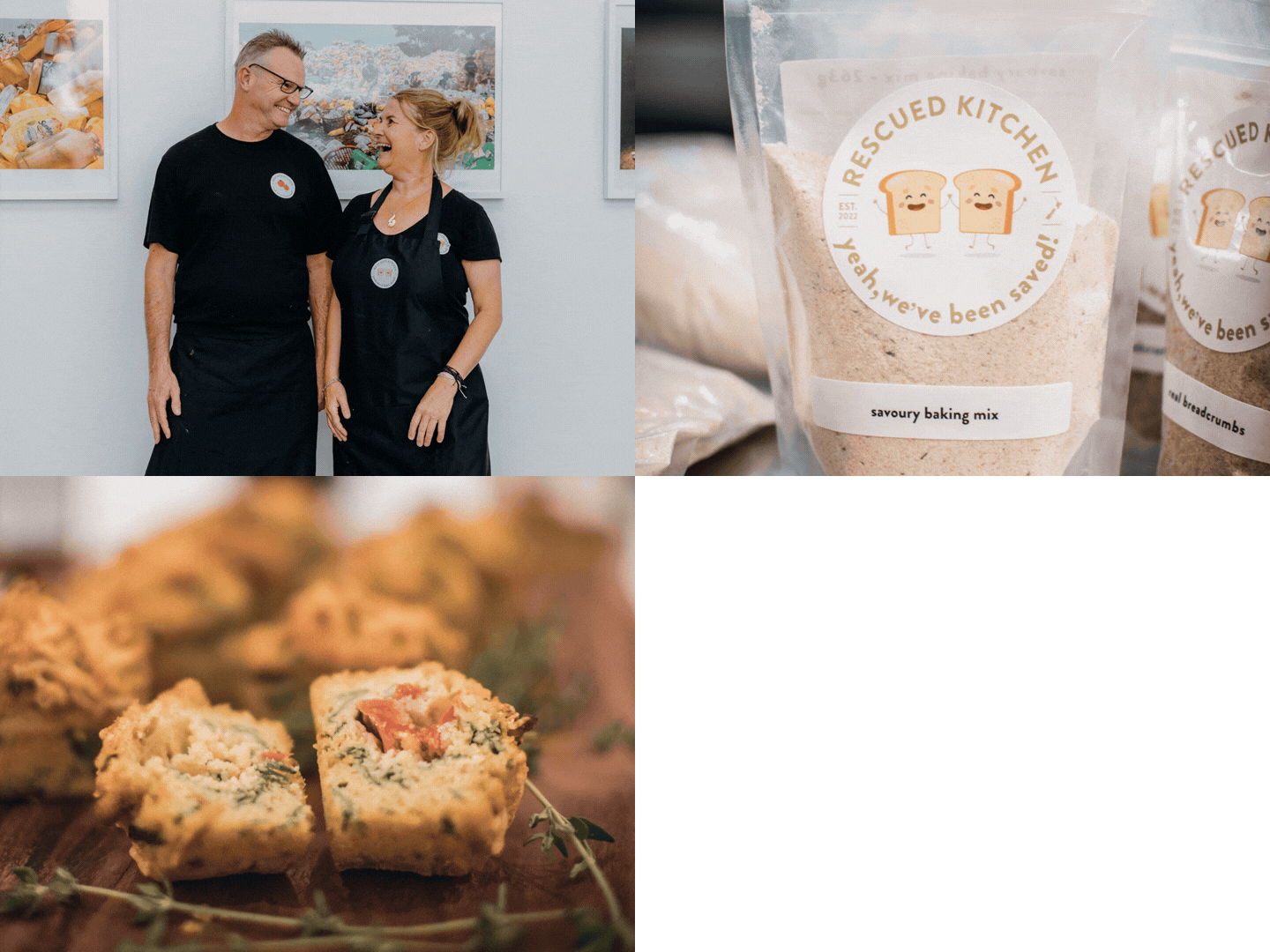
Rescued Kitchen have stopped talking about the problem of food surplus and come up with a solution.
The OFPA judges applauded their mahi - awarding Rescued Kitchen Savoury Baking Mix a Gold Medal in the Earth category. The judges’ notes say they were inspired by the sustainably sourced herby-onion pantry staple, calling it "a delicious mix, even when plain. Makes a fluffy, soft, moreish bake."
It was an idea borne from Covid-19 lockdowns; when Diane Stanbra and Royce Bold combined their backgrounds in cuisine and food science to stop food from deteriorating.
"We prevent perfectly good food from being wasted," Diane begins.
The method is simple in principle, powerful in practice. Using techniques that have existed for centuries: drying, cooking, pickling, freezing. Totally edible food items are collected from supermarket shelves, distribution centres and farms, then dehydrated down - buying time, and returning to the food system in the form of new ingredients.
Bread is the clearest example. One of the most wasted foods in the world, a loaf is often pulled from shelves days before its best-before date and shuffled down a familiar chain: redistribution if possible, then animal feed, compost, or landfill. Rescued steps in before that drop. They dehydrate it, mill it into a fine powder, and turn it back into flour.
"All sustainability aside, people shop on taste," Diane says. "First and foremost, we just make amazing products."
What makes the model genuinely clever is how tightly everything loops. The baking mix isn't just a finished product; it's designed to keep the cycle going. Home cooks and chefs are encouraged to throw in their own surplus - the squishy tomato, the soft carrot lingering at the back of the fridge. Shelf life extends again through freezing. The loop resets. It's a circular system actually in practice, not just on paper.
That thinking runs through everything. Diane is particularly proud of Rescued’s spent gin botanicals, once landfill-bound, becoming a shelf-stable powder showing up in baking mixes, salts, and marinades. Tomato water too - a byproduct of making chutney from rescued tomatoes - becoming a rich molasses now on the menu at Auckland’s Sky City.
"You really are only limited by imagination," Diane says. Given what Rescued have pulled off with a loaf of bread, that’s no small claim.
Scaling this, though, isn't simple. The equipment needed to process surplus food at volume doesn't really exist in New Zealand yet, so Rescued has had to start building that capability themselves - while simultaneously building the relationships that make the whole thing work. Growers, food networks, manufacturers, chefs. A surprising amount of New Zealand's surplus never even leaves the farm. Rescued sits in that gap, redirecting food before it becomes waste, and in some cases paying growers for produce that would otherwise be left unharvested.
The bigger challenge is still perception. People may hear 'upcycled' and think ‘compromise’. But in reality, “the raw materials are often excellent - just surplus, misshapen, or out of step with demand” Diane explains. “The job is to prove that through the product itself. Every time someone bites into one of our muffins and doesn't quite understand why it's so good - that's the proof of concept.”
The Gold medal helps. Not as an endpoint, but as momentum. A relaunch of the baking mixes is coming, as are developments in compost aids and various nifty home comforts. News of the award has given the team the push to make it count.
Because the goal was never to be niche.
Rescued is working toward something bigger: a food system where using surplus isn't unusual, it's standard. Where manufacturers reach for it by default. "If every product prioritised surplus," Diane says, "we wouldn't have a problem anymore."
For now, they're building that future piece by piece - starting with something as ordinary as a loaf of bread, and refusing to let it go to waste. To learn more, visit the Rescued Kitchen website.